When 'Normal' Hormone Levels Still Leave You Feeling Terrible: The Case for Looking Beyond the Lab Panel

For a significant number of women navigating hormonal symptoms — fatigue, mood instability, heavy periods, breast tenderness, weight gain that resists every conventional intervention — the visit to a physician often ends with the same frustrating conclusion: your labs look fine. Estradiol, progesterone, FSH, LH — all within reference range. The implicit message is that nothing is wrong.
But that conclusion rests on a fundamental assumption that contemporary research is beginning to seriously question: that measuring circulating hormone levels is sufficient to understand hormonal health. Increasingly, the evidence suggests it is not.
The more clinically meaningful question may not be how much estrogen a woman produces, but what her body does with it once it enters the metabolic pipeline.
The Life Cycle of Estrogen — A Process Medicine Often Abbreviates
Estrogen does not simply appear in the bloodstream and disappear when it is no longer needed. It follows a metabolic trajectory, and the quality of that trajectory has substantial consequences for how a woman feels — and for her long-term health risk profile.
After estrogen fulfills its signaling role, it travels to the liver for biotransformation. This occurs in two stages. Phase I metabolism, mediated primarily by cytochrome P450 enzymes, converts estrogens into intermediate metabolites. The three primary estrogen metabolites produced at this stage — 2-hydroxyestrone, 4-hydroxyestrone, and 16-alpha-hydroxyestrone — are not equivalent. The 2-hydroxy pathway is generally considered protective. The 4-hydroxy and 16-alpha-hydroxy pathways are associated with greater estrogenic activity and, in excess, have been studied in relation to estrogen-sensitive tissue proliferation.
Phase II metabolism then neutralizes these intermediates through processes including glucuronidation, sulfation, and methylation — the last of which depends heavily on the COMT enzyme and adequate methyl donors such as folate, B12, and magnesium. Once conjugated, estrogen metabolites are intended for excretion, primarily through bile and into the gastrointestinal tract.
This is where a second, often overlooked system enters the picture.
The Gut's Role in Estrogen Clearance
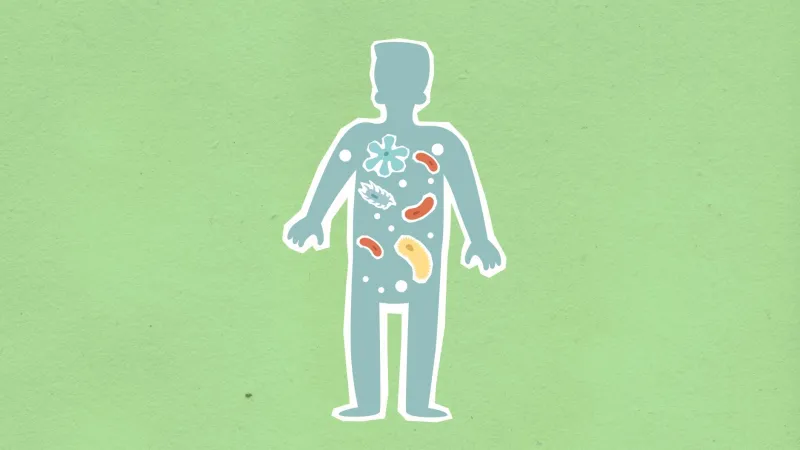
The gut microbiome produces an enzyme called beta-glucuronidase. In a healthy, balanced microbiome, this enzyme performs legitimate physiological functions. In a dysbiotic gut — one where opportunistic bacteria have proliferated at the expense of beneficial species — beta-glucuronidase activity becomes excessive.
Excessive beta-glucuronidase effectively reverses Phase II conjugation. Estrogen metabolites that had been safely bound for elimination are cleaved free, reactivated, and reabsorbed into systemic circulation. This process, sometimes referred to as estrogen recirculation, means that even a woman whose liver is doing its job competently may be re-exposing herself to estrogen she had already processed — simply because her gut flora are undermining the final step.
The clinical implications are significant. A woman may present with symptoms consistent with estrogen excess — bloating, cyclical breast pain, heightened emotional sensitivity, irregular cycles — while her serum estradiol reads entirely within range. The panel is not lying. But it is also not telling the whole story.
The Concept of Estrogen Dominance Revisited
The term estrogen dominance is frequently used in integrative medicine circles, sometimes imprecisely. In its most useful clinical framing, it does not necessarily mean absolute estrogen excess. It describes a functional state in which estrogenic activity is disproportionate — either because progesterone is insufficient to counterbalance it, because estrogen metabolism is producing more potent or proliferative intermediate forms, or because poor clearance is allowing reactivated estrogens to re-enter circulation.
This means estrogen dominance and estrogen deficiency are not mutually exclusive. A perimenopausal woman with declining ovarian output may simultaneously have impaired hepatic Phase II function, a dysbiotic gut, and nutritional deficits in the cofactors required for methylation. She may be producing less estrogen than she did at 35, while still experiencing symptoms of relative excess — because her clearance capacity has declined proportionally or more steeply than her production.
Conventional hormone replacement therapy, in this context, addresses only one variable. Adding exogenous estrogen into a system that is already struggling to metabolize and eliminate endogenous estrogen may amplify symptoms rather than resolve them — a clinical reality that some practitioners encounter but that standard HRT protocols are not designed to address.
Why Phase I/II Enzyme Function Matters — and What Impairs It
Several common, modifiable factors compromise hepatic estrogen metabolism in American women:
Nutritional insufficiency. The COMT methylation pathway requires methionine, folate, B12, and magnesium. Suboptimal dietary intake — or genetic variants in MTHFR that reduce folate conversion — can slow Phase II throughput substantially. Cruciferous vegetables, which provide indole-3-carbinol and its derivative DIM, have been studied for their capacity to shift Phase I metabolism toward the favorable 2-hydroxy pathway.
Alcohol consumption. Even moderate alcohol intake has been shown in research to elevate circulating estrogen levels, in part by competing for cytochrome P450 enzyme activity and impairing hepatic clearance.
Environmental xenoestrogens. Endocrine-disrupting compounds found in plastics (BPA, phthalates), pesticide residues, and certain personal care products can occupy estrogen receptors and burden the same detoxification pathways responsible for clearing endogenous estrogen.
Chronic constipation. Extended gut transit time increases the window during which beta-glucuronidase can act on conjugated estrogen metabolites in the colon, raising the probability of reabsorption.
Gut dysbiosis. As noted, an imbalanced microbiome directly elevates beta-glucuronidase activity. Notably, the collection of gut bacteria involved in estrogen metabolism has been given its own designation in the research literature: the estrobolome.
What More Complete Evaluation Might Look Like
For women whose symptoms persist despite normal standard panels, a more comprehensive evaluation might reasonably include urinary hormone metabolite testing — such as the DUTCH (Dried Urine Test for Comprehensive Hormones) — which measures not only hormone levels but the downstream metabolites that reflect how those hormones are being processed. This provides visibility into Phase I pathway ratios and Phase II conjugation efficiency that a serum panel cannot offer.
Assessment of gut microbiome composition, stool beta-glucuronidase activity, and markers of intestinal permeability may also be clinically informative, particularly in women with concurrent gastrointestinal symptoms or a history of antibiotic use.
Nutritional status — specifically B vitamins, magnesium, and glutathione precursors — warrants evaluation as well, given their central role in hepatic conjugation pathways.
It is worth stating clearly: this level of investigation is not yet standard of care in most US clinical settings. Many of these tests are ordered through functional medicine practitioners, and insurance coverage varies widely. That said, the underlying science is not fringe. The estrobolome has been studied in peer-reviewed journals including Nature Reviews Endocrinology. The cytochrome P450 estrogen metabolism pathway is well-established biochemistry.
The Practical Takeaway for Patients
If you are a woman who has been told your hormone levels are normal while continuing to experience symptoms that feel hormonal — fatigue, mood shifts, cycle irregularities, weight changes, or persistent breast tenderness — it is reasonable to ask your provider whether estrogen metabolism, rather than estrogen production, has been considered.
The question is not whether your body is making enough estrogen. The question is whether it is processing what it makes — and clearing it effectively. Those are different biological questions, and they may require different clinical answers.
Hormonal health, viewed through an evidence-based lens, is not a single number on a lab report. It is a dynamic process that spans the liver, the gut, the microbiome, and nutritional status simultaneously. Treating it as such is not a departure from good medicine. It may, in fact, be what good medicine increasingly demands.